
Description
The efficiency of global trade depends not only on infrastructure, but also on how well information flows between stakeholders. Even the most advanced ports and airports can experience delays if cargo data is fragmented or poorly coordinated. In today’s fast-paced trade environment, logistics networks must operate as connected ecosystems rather than isolated entities. A cargo community system (CCS) enables this transformation by creating a shared digital framework where all cargo stakeholders collaborate seamlessly. By improving coordination, visibility, and data accuracy, cargo community systems are becoming a critical foundation for smarter logistics networks.
Cargo movement involves many independent players—freight forwarders, shipping lines, terminal operators, customs authorities, transporters, warehouses, and inspection agencies. Each organization may use its own systems and processes, often resulting in disconnected data flows.
This lack of integration creates information gaps that lead to:
Delays in cargo release
Repeated follow-ups and manual coordination
Inaccurate or inconsistent documentation
Increased operational costs
A cargo community system is designed specifically to close these gaps.
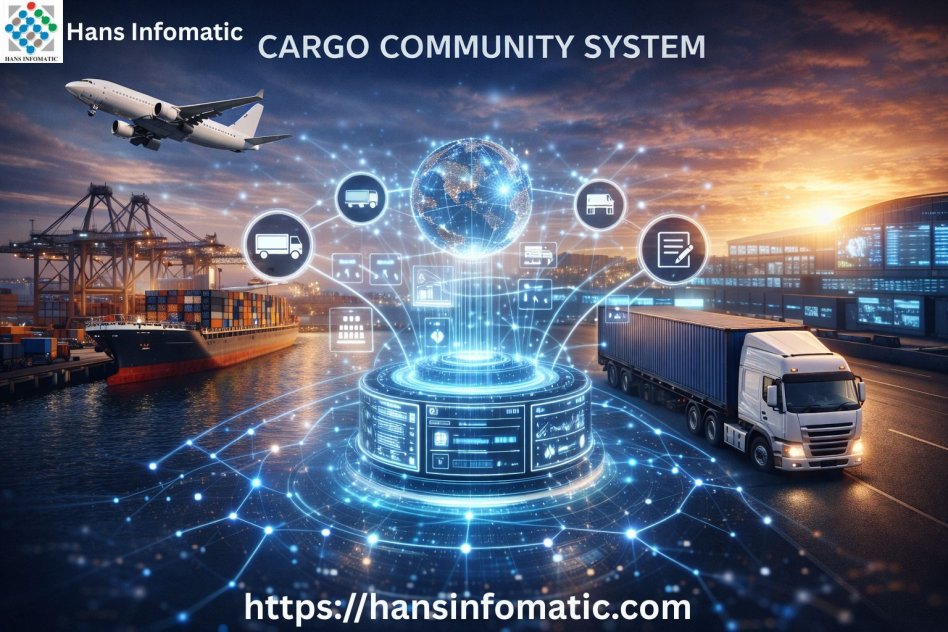
A cargo community system is a neutral digital platform that allows all authorized stakeholders to exchange cargo-related information in a standardized and secure manner. It acts as a collaboration layer that connects existing systems rather than replacing them.
By enabling structured data sharing, a CCS ensures that all participants have access to the same real-time information, improving coordination and decision-making across the logistics network.
Logistics networks today are under constant pressure to move cargo faster while maintaining compliance and transparency. Manual coordination and siloed systems are no longer sufficient to meet these demands.
Cargo community systems support modern logistics networks by:
Digitizing shared workflows
Improving real-time communication
Reducing dependency on emails and phone calls
Supporting paperless trade initiatives
As cargo volumes grow, CCS platforms help networks scale without sacrificing efficiency.
One of the core strengths of a cargo community system is data standardization. When stakeholders work with inconsistent data formats, errors and delays become unavoidable.
A CCS standardizes critical cargo information such as shipment details, arrival schedules, documentation status, and clearance updates. Data is entered once and shared securely, reducing duplication and improving accuracy.
Standardized data creates trust and reliability across the logistics network.
Visibility is essential for effective logistics planning. Without real-time insight into cargo status, stakeholders are forced to react rather than plan.
Cargo community systems provide end-to-end visibility across the cargo lifecycle, from arrival and documentation to clearance and dispatch. This shared visibility enables:
Better resource planning
Faster issue resolution
Improved customer communication
Predictable cargo movement is a direct result of improved visibility.
Customs clearance remains a critical checkpoint in cargo movement. Delays at this stage can disrupt entire supply chains.
A cargo community system supports customs operations by enabling early data submission, digital documentation, and standardized workflows. This allows customs authorities to perform risk assessment more efficiently and make faster clearance decisions.
For logistics operators, reliable customs processes mean reduced dwell time and lower operational risk.
Congestion at logistics hubs is often caused by poor coordination rather than physical limitations. When stakeholders lack timely information, transport schedules and terminal operations become misaligned.
Cargo community systems improve planning by sharing advance information on cargo readiness and movement schedules. This enables better utilization of infrastructure and smoother cargo flow.
Reduced congestion leads to faster turnaround times and improved network performance.
Freight forwarders play a central role in coordinating cargo movement across multiple stakeholders. However, fragmented communication often increases their administrative burden.
With a cargo community system, freight forwarders gain centralized access to cargo data, clearance updates, and operational milestones. This reduces manual follow-ups and allows forwarders to deliver better service to their customers.
Logistics operations require continuous decision-making across organizations. Without shared data, decisions are often delayed or based on incomplete information.
A cargo community system enables collaborative decision-making by providing a common operational view. Stakeholders can align actions, coordinate responses, and resolve issues more effectively.
Collaboration becomes proactive rather than reactive.
Operational inefficiencies increase costs for everyone involved in cargo movement. Storage charges, demurrage, detention, and missed delivery commitments are common consequences of poor coordination.
By improving information flow and reducing delays, cargo community systems lower total logistics costs across the ecosystem. Cost savings are achieved through collective efficiency rather than isolated optimization.
The success of a cargo community system depends on robust technology and deep industry knowledge. Platforms must be scalable, secure, and interoperable with existing systems.
Hansinfomatic Pvt Ltd is a technology provider focused on building intelligent digital solutions for logistics and trade ecosystems. With expertise in freight forwarding and customs processes, the company develops platforms that support ecosystem-level collaboration.
Solutions such as iCaffe help freight forwarders integrate their internal workflows with broader cargo community systems, ensuring smooth data exchange and operational alignment.
Governments around the world are promoting digital trade, single-window systems, and paperless documentation. Cargo community systems align naturally with these initiatives.
By enabling standardized digital workflows and transparent data exchange, CCS platforms support trade facilitation goals and enhance national logistics performance.
Cargo community systems generate valuable operational data that can be used for performance measurement and strategic planning.
Stakeholders can analyze trends related to dwell time, clearance efficiency, throughput, and congestion. These insights support informed investment decisions and continuous improvement initiatives.
Successful CCS implementation requires more than technology. Stakeholder engagement, governance, and change management are critical.
Best practices include:
Clear value propositions for all participants
Strong data governance and security
User-friendly interfaces
Ongoing training and support
Technology partners play a key role in ensuring smooth adoption and long-term success.
The future of logistics will be increasingly connected, automated, and collaborative. Cargo volumes will continue to grow, and regulatory environments will become more complex.
Cargo community systems provide the digital foundation needed to manage this future effectively. Early adopters build more resilient, efficient, and competitive logistics networks.
A cargo community system is a key enabler of smarter logistics networks. By standardizing data, improving visibility, supporting compliance, and strengthening collaboration, CCS platforms transform fragmented cargo operations into integrated ecosystems.
With technology providers like Hansinfomatic Pvt Ltd supporting innovation and platforms such as iCaffe enabling seamless freight forwarding integration, cargo community systems are shaping the future of global trade.
For logistics networks seeking long-term efficiency and sustainability, investing in a cargo community system is a strategic decision that delivers lasting value.
Ready to transform your operations?
Visit https://hansinfomatic.com/ to book your free demo today.
Reviews
To write a review, you must login first.
Similar Items

SignSafe Sp. z o.o.

Webhuk ERP

JM-Origin
Neo Software Pvt. ltd.