


Description
When a patient requires intensive medical care, most families automatically turn to hospitals as their first choice. However, in recent years, there has been a growing demand for home-based ICU setups. This shift is primarily due to the need for a more comfortable healing environment, reduced medical expenses, and the desire to stay close to loved ones during recovery. Setting up an ICU at home is no longer just an alternative—it has become a practical, personalized healthcare option.
The concept of ICU at home involves installing critical care equipment and arranging trained medical staff (if needed) in a home environment, offering hospital-level treatment without compromising on comfort. Whether your loved one is recovering from surgery, managing a chronic illness, or receiving end-of-life care, an ICU set-up at home ensures they receive consistent medical supervision in a familiar space.
An ICU at home can benefit a wide range of patients. Those who have undergone major surgeries or are dealing with serious conditions like brain strokes, severe respiratory issues, chronic cardiac problems, cancer, or neurological diseases may need round-the-clock monitoring and equipment support. It is also useful for elderly patients who are bedridden and require long-term care or palliative services. In such cases, shifting them to and from hospitals repeatedly is not only inconvenient but also emotionally and physically taxing.
Patients who are terminally ill or in a semi-conscious state may also benefit from staying at home, where family members can be around, and the patient can spend their remaining time in peace. The home ICU model is a cost-effective solution for families seeking quality care while reducing the risks associated with long-term hospital stays, such as hospital-acquired infections.
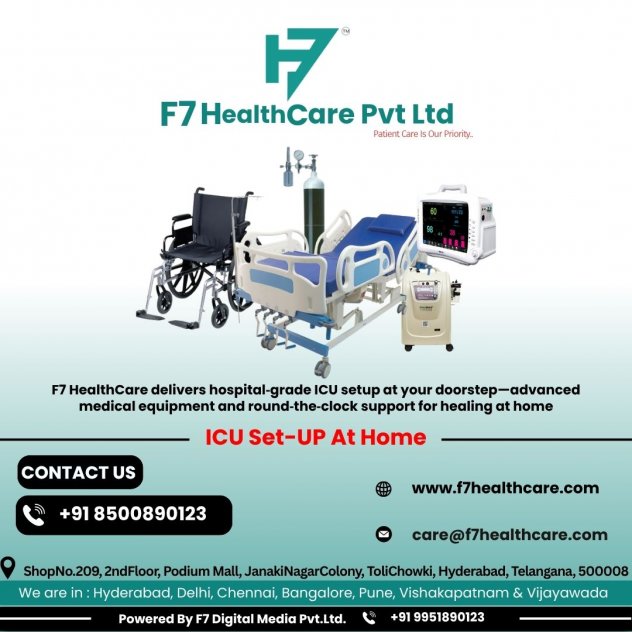
A proper ICU setup at home includes several critical care components to match hospital standards. A motorized hospital bed is usually provided, which can be adjusted for comfort and includes safety features such as side rails and anti-bedsore mattresses. Vital signs need continuous monitoring, so multiparameter monitors are included to track the patient’s heart rate, oxygen saturation, blood pressure, and more. These monitors are essential for early warning signs and quick medical responses.
Respiratory support is a major aspect of critical care. Depending on the patient’s condition, they may need oxygen therapy, non-invasive ventilators like Bi-PAP or CPAP machines, or even a home-use ventilator. Oxygen concentrators or cylinders are installed along with masks or nasal cannulas for proper oxygen delivery. In cases where the patient has difficulty in clearing secretions, suction machines are added to the setup.
Infusion pumps and syringe pumps are used to administer fluids or medications accurately. Other equipment, such as nebulizers for respiratory therapy and emergency supplies like Ambu bags, also form a part of the setup. Together, these tools form the core infrastructure for safe and continuous care at home.
F7 Healthcare has emerged as a reliable provider for home-based ICU setups across India. They understand that every patient’s condition is different, which is why they offer customized packages suited to individual needs. From basic respiratory support to complete ICU infrastructure, F7 Healthcare offers flexible plans for both rent and purchase.
One of the major advantages of choosing F7 Healthcare is that they don’t just deliver the equipment—they provide a full ecosystem of care. Their team assesses your home environment before installation, ensures proper layout and electrical safety, and demonstrates how to use each device. This is followed by 24/7 customer support and maintenance checks, ensuring the equipment remains functional throughout the care period.
The company also arranges for skilled nursing staff and on-call doctors if needed. These professionals are trained to handle ICU equipment and emergencies, bringing hospital-like care right to your living room. F7 Healthcare's equipment is sanitized, well-maintained, and sourced from reputed medical brands, ensuring high safety standards for every patient.
Families often wonder whether it’s better to rent or buy ICU equipment. The answer depends on the medical condition and the expected duration of use. If the patient needs care for a short period—such as recovery after surgery or temporary breathing issues—renting makes more financial sense. It avoids the burden of long-term maintenance and storage.
However, for patients who need prolonged or repeated care, investing in your own equipment might be wise. This is particularly relevant for those dealing with chronic conditions or where home ICU is expected to be part of their routine life for several months. F7 Healthcare offers affordable rent and purchase plans, allowing families to make decisions based on their situation and budget.
Before setting up an ICU at home, several factors need careful consideration. The first is space. A separate, clean, and well-ventilated room with proper power outlets is necessary. The setup should allow easy access for equipment and medical staff, if needed. Another critical aspect is the availability of caregivers. Family members or trained attendants must be present to observe the patient and handle minor tasks. In most cases, a nurse or healthcare professional is needed for round-the-clock supervision.
Proper hygiene is also essential to prevent infections. The room must be cleaned regularly, and disposable medical supplies should be stocked and replaced as required. Emergency plans must also be in place, including a nearby hospital for quick transfers and a communication channel with the patient’s primary doctor.
F7 Healthcare provides ICU-at-home services across major cities including Hyderabad, Bengaluru, Chennai, Delhi, Mumbai, Pune, and expanding towns. The company aims to bridge the gap between hospital care and home care by providing personalized solutions backed by expert support.
To get started, families can request a consultation. A care manager visits the home, reviews the patient's requirements, and prepares a setup plan. The team then installs the equipment, trains caregivers, and remains available for support throughout the treatment period.
Reviews
To write a review, you must login first.
Similar Items

Top Breast Oncologist Medanta Hospital Gurgaon

Best Cardiologist in Warangal - Apollo Reach NSR Hospital

Dr. Abhishek Deepak

Vantage Medical Associates