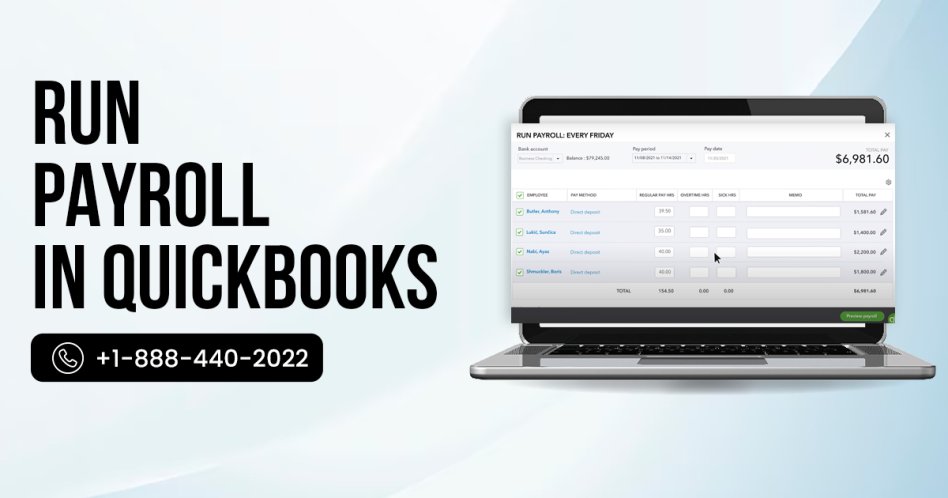


Description
Managing employee wages can feel stressful, but +1-888-440-2022 with the right setup, payroll becomes simple and accurate for every pay period. Businesses of all sizes rely on QuickBooks to calculate salaries, taxes, and deductions while saving valuable time. If you want smooth payroll processing, this guide explains every important step, common issues, and expert solutions so you can pay staff confidently and stay compliant. For direct support, call +1-888-440-2022.
Payroll mistakes can lead to unhappy employees, tax penalties, and accounting confusion. That is why learning how to run payroll in quickbooks correctly is essential for business owners, bookkeepers, and startups. Whether you use Desktop or Online versions, understanding the process helps you avoid delays and errors.
Running payroll means calculating employee earnings, subtracting taxes and deductions, then issuing payments on time. QuickBooks automates many of these tasks, reducing manual calculations and paperwork. It also records payroll expenses directly in your books.
When businesses learn how to run payroll in quickbooks, they can handle:
This makes payroll faster, more organized, and easier to track.
Payroll is not only about paying employees. It also impacts tax compliance, employee trust, and cash flow planning. Even a small mistake in hours or tax rates can create bigger problems later.
Here is why accuracy matters:
That is why many companies search for how to run payroll in quickbooks before processing their first payroll cycle.
Before processing payroll, your QuickBooks account must be configured properly. Initial setup ensures calculations happen correctly every pay period.
Start by adding employee details such as name, address, Social Security or tax ID, payment method, and hourly or salary rate. Then enter tax information, benefit deductions, and bank details for direct deposit.
Next, confirm:
Once setup is complete, you are ready to learn how to run payroll in quickbooks with fewer risks of errors.
After setup, payroll processing becomes much easier. Follow these general steps:
If employees are hourly workers, check submitted timesheets or attendance records. Confirm overtime and leave entries are correct.
Go to the Payroll menu in QuickBooks. Select the option to run scheduled payroll.
Choose the correct start and end dates, plus payday.
Review wages, salary amounts, overtime, bonuses, and deductions.
QuickBooks automatically estimates payroll taxes based on settings.
Approve payroll and send payments by check or direct deposit.
Store payroll summaries for accounting and compliance.
These steps explain how to run payroll in quickbooks smoothly for most businesses.
Many modern businesses prefer the cloud-based version because it allows payroll from anywhere. If you need how to run payroll in quickbooks online, the process is simple.
Open QuickBooks Online, choose Payroll, then Employees. Select Run Payroll. Enter employee hours if needed, review taxes and net pay, then click Submit Payroll.
QuickBooks Online also provides:
If someone asks how do i run payroll in quickbooks online?, this is usually the fastest solution for small businesses.
Sometimes you need to pay an employee outside the regular pay schedule. This can happen with bonuses, missed paychecks, or final settlements.
To understand how to run an off cycle payroll in quickbooks online, open Payroll, choose Run Payroll, then select Off-Cycle Payroll. Enter the employee, payment reason, and amounts. Review taxes and submit.
Off-cycle payroll is useful for:
Using this feature properly prevents confusion in future payroll cycles.
Even with automation, users still make avoidable errors. Learning what not to do saves time and money.
Wrong tax IDs, bank accounts, or pay rates create payment issues.
If time entries are incomplete, employees may be underpaid or overpaid.
Selecting the wrong pay period can duplicate or skip wages.
Outdated tax tables may calculate withholdings incorrectly.
Always preview payroll before submitting.
Businesses searching how to run payroll in quickbooks often discover that most issues come from skipped reviews rather than software problems.
Use these practical tips for smoother payroll management:
Consistency helps businesses reduce stress and maintain employee confidence.
QuickBooks is designed to simplify payroll tasks that usually take hours manually. Instead of spreadsheets and handwritten calculations, it automates repetitive work.
Benefits include:
That is why so many owners want to know how to run payroll in quickbooks rather than use manual systems.
Mistakes can still happen. If payroll was submitted incorrectly, act quickly.
You may need to:
QuickBooks often provides correction tools, especially in Online Payroll. If the issue is complex, payroll support can guide you.
Payroll does not need to be overwhelming. Once employee data is set correctly and pay schedules are organized, QuickBooks makes the process much easier. By reviewing hours, confirming deductions, and checking reports before submission, businesses can pay staff accurately every cycle.
Whether you use Desktop or Online, understanding payroll basics prevents delays, tax mistakes, and employee frustration. Use the steps in this guide to manage payroll confidently and keep your finances organized.
Sign in to QuickBooks Online, open Payroll, and complete employee setup first. Add pay rates, tax details, and payment methods. Then choose Run Payroll, enter hours, review deductions, and submit. For help with first-time setup, call +1-888-440-2022 anytime.
Review employee hours, confirm pay dates, check deductions, and preview totals before approval. Using direct deposit and updated tax settings can reduce errors. Businesses using how to run payroll quickbooks online methods should always verify details before submission.
Use the off-cycle payroll option in QuickBooks Online. Select the employee, enter the missed wages, review taxes, and submit payment. This is the best answer for users asking how do i run payroll in quickbooks online after missing a regular payday.
Choose Run Payroll, confirm the scheduled pay period, and QuickBooks will auto-fill salary amounts. Review deductions, taxes, and benefits, then submit. Salaried payroll is faster because hours usually do not need manual entry unless adjustments apply.
That depends on your company pay schedule—weekly, biweekly, semimonthly, or monthly. Keep the same schedule for consistency. If changes are needed, update payroll settings first so taxes, benefits, and employee expectations remain accurate and organized.
Reviews
To write a review, you must login first.
Similar Items

MARIELA RUIZ, CPA, PLLC

Logic way banking & consultation
Funeral Home Financing Services in USA | 4BSF

Ritz Corporation